
From Templates to Intelligence: AI Tools Revolutionizing Enrollment Workflows
For decades, admissions and registrar leaders have fought the same battle: too many transcript formats, too many templates, and never enough time. Every cycle brought new layouts, exceptions, and manual fixes. Implementation projects dragged on for months, and template libraries broke the moment a high school changed its header.
Now, artificial intelligence is rewriting that story.
A new generation of AI-driven transcript and enrollment tools can read and understand transcripts from nearly any source and no templates required. These systems learn from thousands of real-world layouts, extract structured data automatically, and push it directly into SIS or CRM systems. Put away those carpal tunnel gloves folks. This is a rare example of AI in higher education actually working. AI is enhancing human expertise, speeding up student decisions, and freeing staff from hours of repetitive data entry.
Four Systems Transforming Admissions & Registrar Workflows
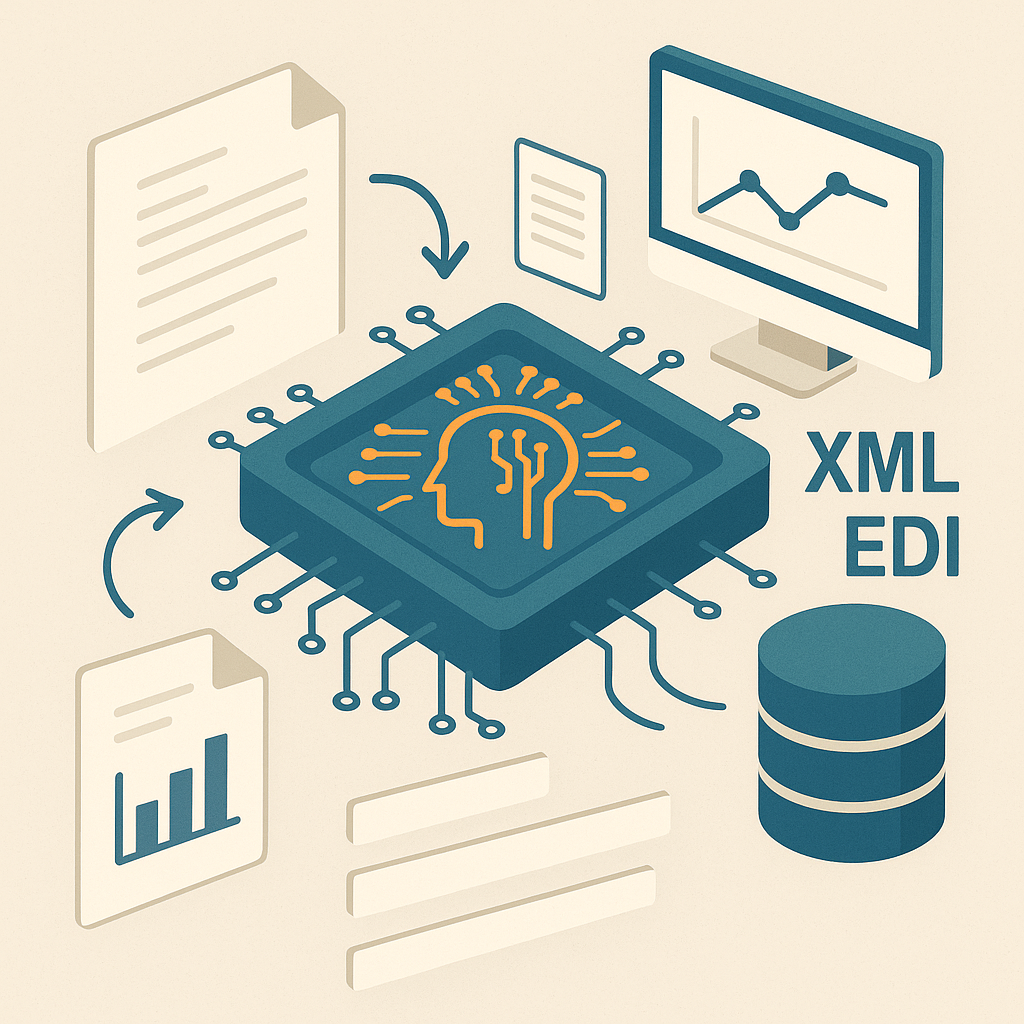
Parchment Pathways Data Automation by Instructure - Industry Leader
What it does:
Combines Parchment’s expansive digital-transcript network with Smart Panda Tools’ Raptor AI engine to automate transcript intake, parsing, and downstream integration — handling both scanned PDFs and native EDI/XML data feeds.
Why it matters:
Parchment has evolved from a delivery network into a data-automation platform. The Raptor engine interprets transcript data at scale, mapping courses, credits, and grades within seconds and delivering clean, structured data directly into institutional systems.
Impact:
The result is faster transcript processing, higher data accuracy, and greater staff efficiency — turning what was once a manual, time-consuming task into an automated, real-time workflow.
Takeaway:
A scalable, network-driven solution that continuously improves as more institutions use it — combining reach, reliability, and intelligence in one automation platform.
EddyAI™ by EdVisorly - The New Kid on the Block
What it does:
EdVisorly’s EddyAI engine uses advanced AI to read transcripts, evaluate transfer credits, and recommend articulation pathways — all without templates or custom rules.
Why it matters:
While legacy vendors were refining template-based OCR, EdVisorly started with an AI-first approach. It learns from messy real-world data, improving as it processes more transcripts. Its focus on credit mobility and transfer evaluation directly supports one of higher ed’s biggest challenges: helping students move efficiently between institutions.
Impact:
EddyAI delivers near-instant credit evaluations, enabling institutions to identify and enroll eligible transfer students faster and with greater precision.
Takeaway:
EdVisorly is the new kid on the block, but it’s growing fast. Agile, AI-native, and purpose-built for enrollment operations. Watch out, big tech. The next generation just enrolled.
Brainware by Hyland - Old Dog Learning New Tricks
What it does:
Hyland, long known for its OnBase content-management platform, has modernized with Brainware for Transcripts — an AI-powered capture engine that reads, classifies, and extracts course and grade data from any format, including scanned PDFs, XML, and EDI.
Why it matters:
After decades of powering campus workflows, Hyland is adding genuine intelligence to its toolkit. Brainware eliminates the need for templates or anchor zones and integrates directly with OnBase and SIS environments to route validated data for review or posting.
Impact:
Institutions using Brainware achieve faster turnaround times, higher accuracy, and consistent compliance, while freeing staff to focus on complex evaluations and student service.
Takeaway:
Hyland may be the old dog learning new tricks, but it’s learning fastblending enterprise stability with modern AI to stay relevant in the new admissions era.
Grooper by Business Imaging Systems - Capable, But Still Finding Its Higher-Ed Identity
What it does:
Grooper is a powerful AI-OCR and data-capture platform that can extract structured information from complex documents, including transcripts, test scores, and academic records.
Why it matters:
Technically, Grooper is strong. Its OCR and machine-learning capabilities are proven. But with a broad cross-industry focus (energy, healthcare, finance, government), it’s more of a generalist tool than a higher-ed-native solution.
Impact:
Grooper enables institutions to convert high volumes of legacy documents into structured data quickly, significantly reducing manual processing time and improving throughput.
Takeaway:
A flexible, configurable option for institutions that want full control and already use Grooper elsewhere but it may adapt more slowly to registrar- and admissions-specific needs than its higher education specialized competitors.
Shared Strengths Across the New Generation
Template-Free Recognition: Modern AI eliminates fragile template libraries, learning from real layouts instead.
OCR + Native Data Support: All leading tools process both scanned PDFs and structured EDI/XML files, bridging the old and new worlds.
Integration-Ready: Each connects with major SIS and CRM systems Banner, Colleague, PeopleSoft, Slate, and Jenzabar among them.
Crowd-Sourced Intelligence: Accuracy improves as more institutions join the network, driving collective learning across higher ed.
Human Amplification: AI isn’t replacing registrar or admissions expertise it’s freeing staff to focus on students and decisions rather than data entry.
Closing Thoughts
For too long, admissions and registrar professionals have carried the weight of outdated technology long implementations, brittle templates, and manual rework that drained entire teams. Now, AI is doing what higher-ed tech always promised but rarely delivered: simplifying complexity and amplifying people.
The new generation of tools from Parchment’s Data Automation to EdVisorly’s EddyAI, Hyland’s Brainware, and Grooper’s flexible automation marks the stabilization of automated enrollment operations.
Beyond these four, the landscape is getting crowded. Seasoned players like KnowledgeLake and ImageSource are retooling their legacy platforms with AI, while newcomers like DegreeSight and QDox/Quantiphi are redefining what next-generation data automation can look like for colleges and universities. It’s a sign of real momentum: after years of slow evolution, innovation is finally accelerating in one of higher ed’s most overlooked operational spaces.
In this story, AI isn’t replacing people; it’s finally helping them work the way they’ve always wanted to.
